Why Your Demo Follow-Up Emails Get Ignored (And the Three Questions That Actually Get Responses)
Why Your Demo Follow-Up Emails Get Ignored (And the Three Questions That Actually Get Responses)
Strategic Analysis by: Insight2Strategy
Published: November 3, 2025
Executive Reading Time: 6 minutes
Executive Strategic Insights
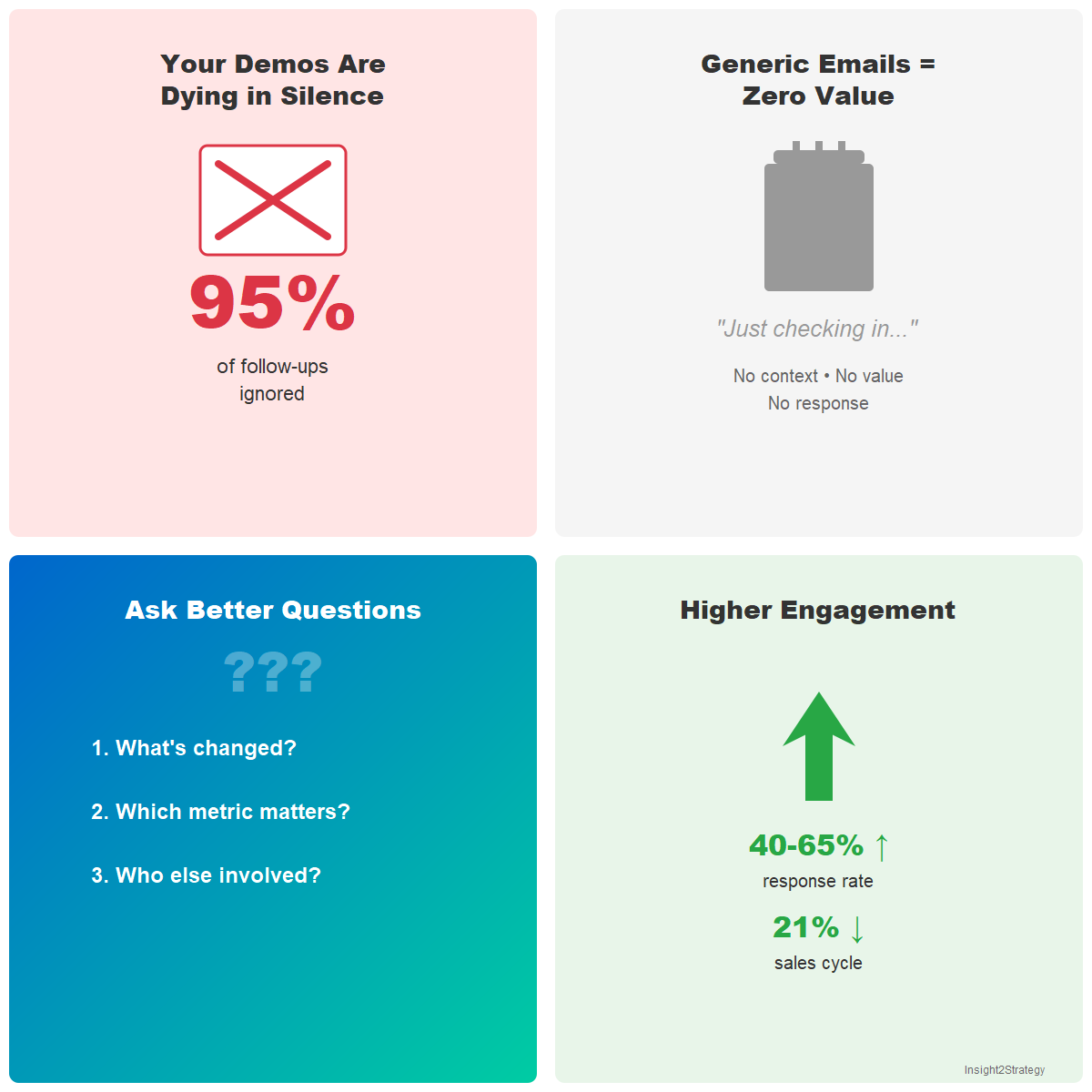
- 95% of sales follow-ups fail because they ask for attention instead of driving decisions
- 80% of sales require 5+ follow-up touches, yet 44% of reps quit after one attempt
- Question-based follow-ups deliver 40-65% higher response rates compared to generic check-ins
- Three strategic questions transform ghosted prospects into scheduled next steps
- Implementation framework provided below with proven email templates and timing guidance
The Silent Pipeline Killer
You just delivered what felt like a killer demo. The prospect was engaged, asked smart questions, and even said they'd "circle back soon." So you send a thoughtful follow-up email the next day. Then another three days later. Maybe one more the following week.
Silence.
If this scenario sounds familiar, you're not alone—and it's costing you real revenue. With 80% of sales requiring five or more follow-up attempts (Smartlead, July 2025), but 44% of salespeople giving up after just one try (SPOTIO, February 2025), qualified opportunities are slipping through the cracks every single day.
But here's what most sales teams miss: the problem isn't that you're following up. It's that you're asking for attention instead of driving decisions.
Let me show you what's really happening in your prospect's inbox, and the three simple question pivots that transform silence into scheduled next steps.
Download the Demo Response Generator
Get instant access to the Demo Response Generator — enter your email below and we'll send the download link right over.
Why Do Generic "Just Checking In" Emails Die on Arrival?
Most demo follow-ups follow the same doomed pattern:
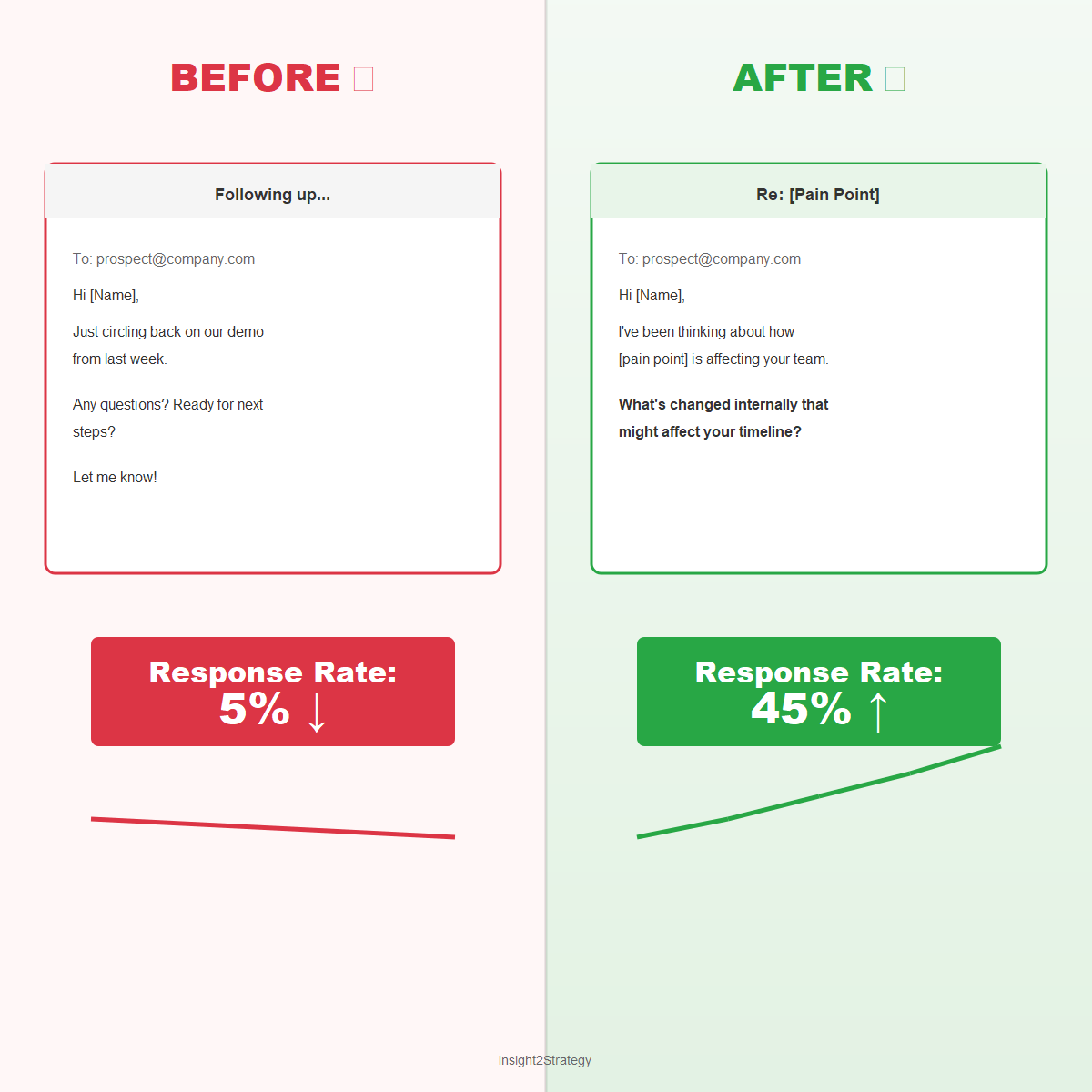
"Hi [Name], just checking in on our demo last week. Do you have any questions? Would love to schedule time to discuss next steps."
This email is essentially polite nagging. It signals three critical failures to your prospect:
- No new value - You're not helping them solve problems; you're helping yourself hit quota
- No urgency - There's no reason to respond today versus next month (or never)
- All the work - They have to figure out what questions to ask, what next steps make sense, and how to build internal consensus
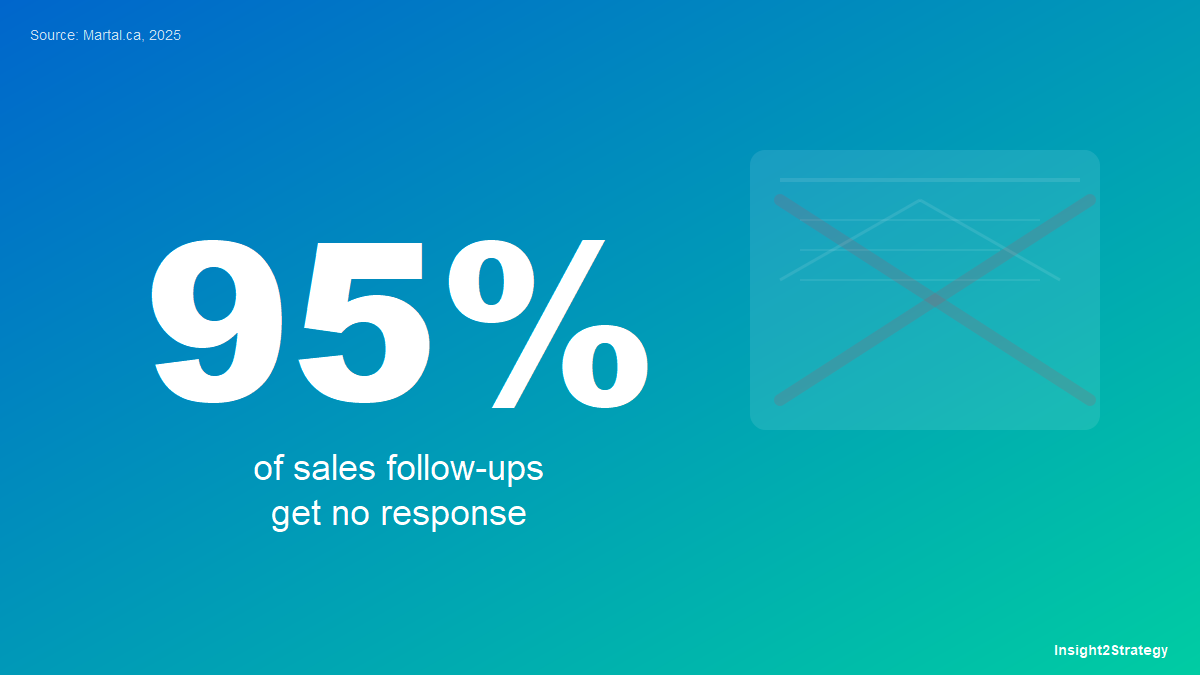
The result? Your email joins the 95% of sales emails that never get a reply (Martal.ca, July 2025). Even worse, with only 5.1% of sales emails generating responses in typical outreach campaigns (Martal.ca, July 2025), your carefully crafted follow-ups are statistically doomed before you hit send.
⚡ Quick Implementation Tip
Review your last five demo follow-up emails. Count how many times you said "checking in," "circling back," or "following up." Each instance is a missed opportunity to add strategic value. Replace these phrases with specific questions that reference your prospect's unique situation.
But here's the uncomfortable truth: Your prospects aren't ghosting because they forgot about you. They're ghosting because you gave them no specific reason to respond.
When you shift from status checks to strategic questions, everything changes. Research from HubSpot (August 2025) shows that the first follow-up email alone can boost replies by 49%—but only when it adds value rather than merely checking in.
The Three Strategic Questions That Force Decisions (Not Attention)
Stop sending reminders. Start leading conversations. Here are the three question-based pivots that transform your follow-up emails from ignored to actioned:
Question 1: "What was the most valuable takeaway from our demo?"
Why This Works:
This question shows you're listening, not just following a script. It repositions you from "vendor checking in" to "strategic partner ensuring clarity."
More importantly, it opens a dialogue. When prospects answer this question, they often reveal:
- Which features actually resonated (versus what you emphasized)
- Gaps in understanding that need clarification
- Concerns they didn't voice during the demo
- Real priorities that differ from what they initially claimed
Strategic Deployment:
Use this question in your first follow-up (24-48 hours post-demo). According to HubSpot research (August 2025), initial follow-ups that ask clarifying questions boost response rates by 49% compared to generic check-ins.
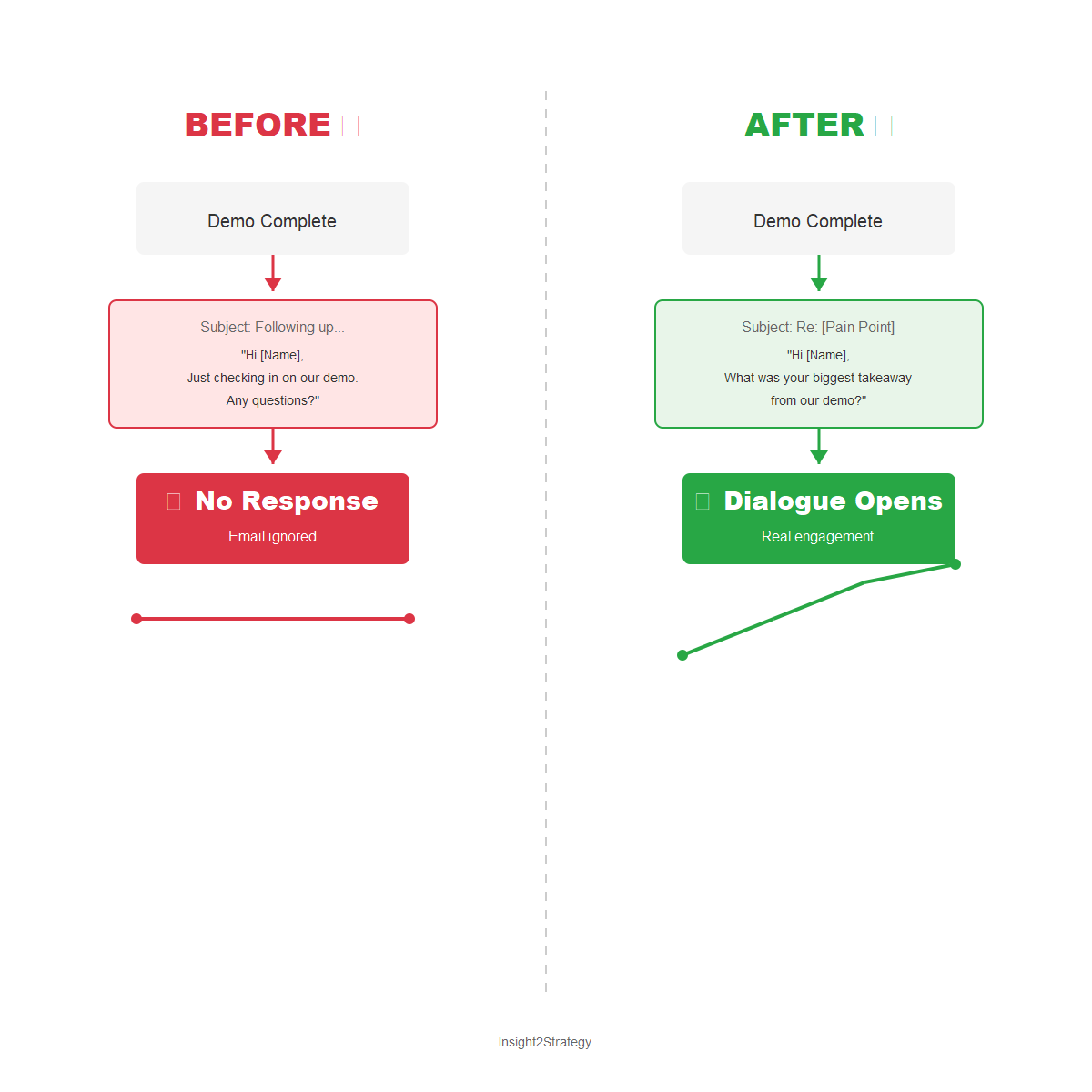
📧 Implementation Example
Subject: Quick question about [specific pain point discussed]
"Hi [Name],
I've been thinking about the [specific pain point] we discussed during our demo. What was the most valuable takeaway for you? I want to make sure we addressed your main concerns and didn't miss anything important.
Based on your answer, I can send over additional resources or schedule a quick call to dive deeper into what matters most for your team.
[Your name]"
Question 2: "What challenges are you still facing that we didn't fully cover?"
Why This Works:
This question positions you as a partner helping solve problems, not just a vendor pushing product. It invites prospects to share concerns they might have been hesitant to voice during the demo—especially in front of stakeholders or decision-makers.
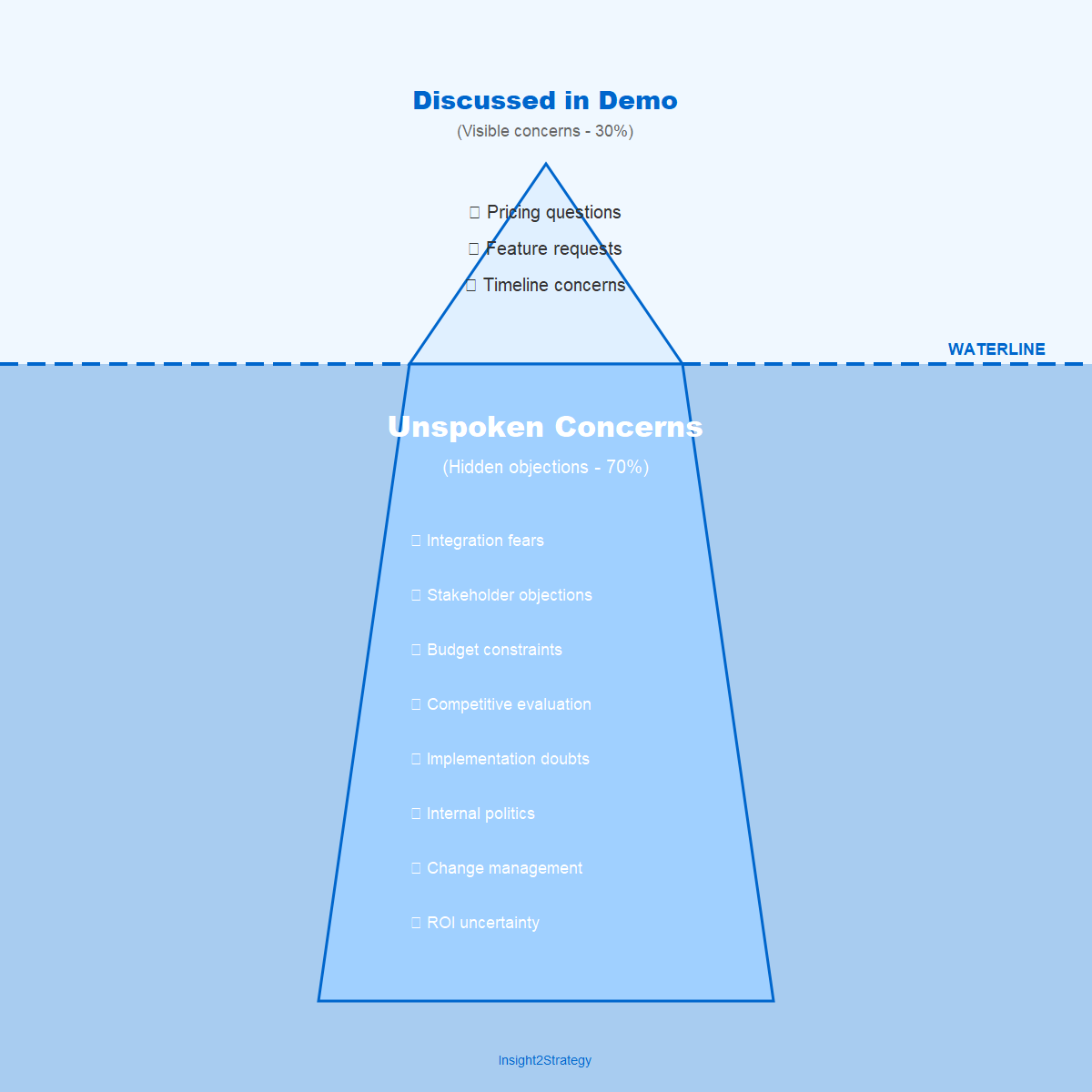
Demos cover a lot of ground, but prospects often leave with unspoken doubts:
- Integration concerns they didn't want to admit
- Budget constraints they're navigating internally
- Competitive alternatives they're still evaluating
- Stakeholder objections they're anticipating
This question surfaces those roadblocks before they become deal-killers.
The Statistical Impact:
Research from Saleshandy (August 2025) shows that adding 2-3 thoughtful follow-ups can lift response rates by 65.8%—but only when those follow-ups provide value. Addressing unspoken challenges directly demonstrates that value.
Moreover, with B2B sales cycles lengthening in 2025 according to Johnny Grow's sales trend analysis, giving prospects permission to voice concerns early accelerates deals by preventing late-stage surprises.
📧 Implementation Example
Subject: Following up on [specific challenge discussed]
"Hi [Name],
Based on our demo last week, what challenges are you still facing that we didn't fully address?
I know we covered [Feature A] and [Feature B], but I want to make sure we're solving your actual pain points—not just showing off what the platform can do.
Even if it's something you think might be outside our scope, I'd love to hear about it. Sometimes those 'edge case' concerns lead to the most valuable conversations.
[Your name]"
Question 3: "How does this fit into your current priorities and timeline?"
Why This Works:
This question respects their buying process while gathering critical intelligence about timing, urgency, and internal dynamics. Rather than pushing for a decision on your timeline, you're helping them navigate their own evaluation process.
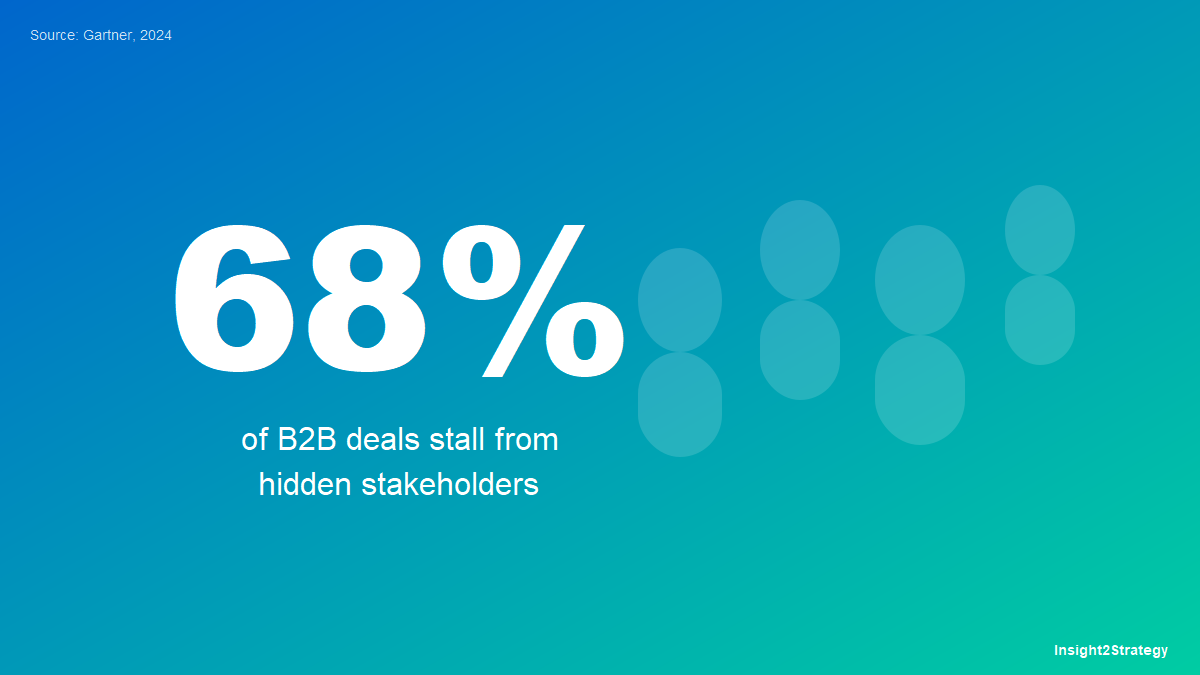
This approach matters because 68% of deals stall or die because a hidden stakeholder wasn't involved early enough (Gartner B2B Buying Journey, 2024). When you understand their priorities and timeline, you can:
- Time future follow-ups for maximum relevance
- Identify who else needs to be involved
- Position yourself as helping them succeed internally
- Avoid the premature closing pressure that triggers ghosting
The Context of Longer Cycles:
With 80% of sales needing 5+ follow-up touches (Smartlead, July 2025) and B2B buying cycles extending throughout 2025, knowing when to follow up—and what to say—becomes the difference between persistence and annoyance.
📧 Implementation Example
Subject: Your timeline for [initiative discussed]
"Hi [Name],
I want to be respectful of your evaluation process. How does this fit into your current priorities and timeline?
If this is a Q4 decision, I'll check back in [specific timeframe] with some fresh insights that might be helpful. If the timeline is different, just let me know—I don't want to be that vendor who keeps 'just checking in' at the wrong time.
Also, are there specific milestones or internal approvals you're navigating? Sometimes knowing what's happening on your end helps me provide better support.
[Your name]"
How Do You Structure the Complete Follow-Up Sequence?
Don't blast all three questions in one email. Deploy them strategically across a thoughtful sequence that builds momentum:
📅 Strategic Follow-Up Timeline
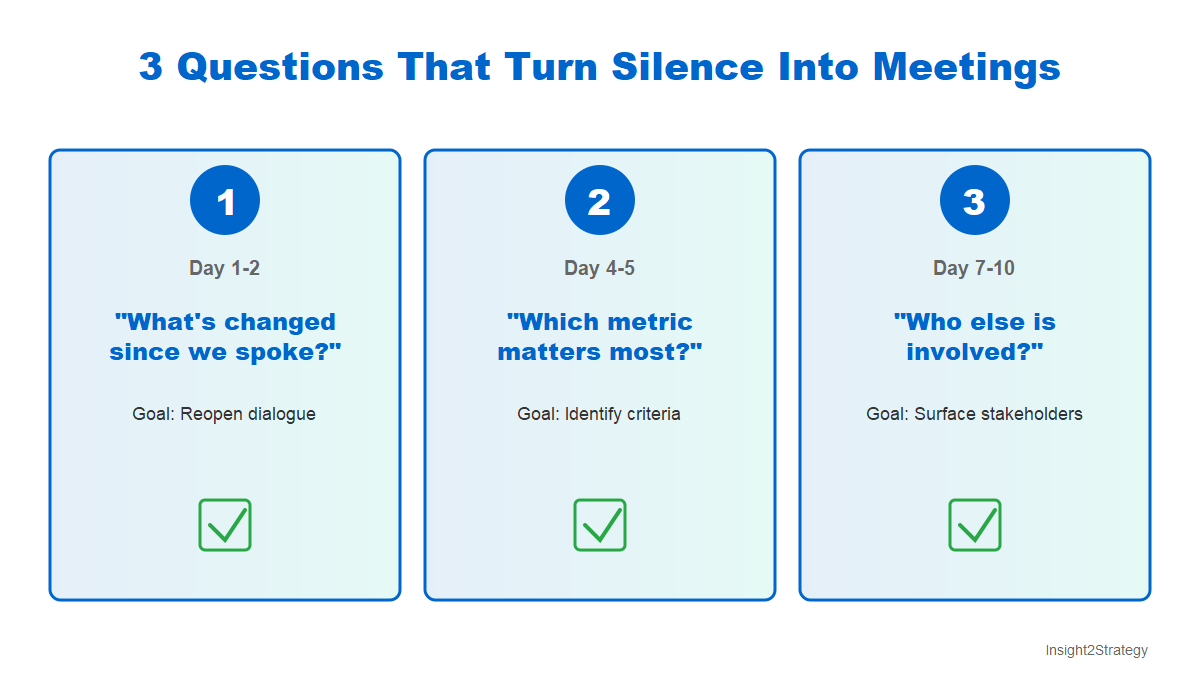
Follow-Up #1 (Day 1-2 post-demo):
Question: "What was the most valuable takeaway from our demo?"
Goal: Re-open dialogue, identify what resonated, clarify gaps
Success Indicator: They respond with specific insights or questions
Follow-Up #2 (Day 4-5):
Question: "What challenges are you still facing that we didn't fully cover?"
Goal: Surface hidden objections, position as problem-solver
Success Indicator: They share concerns you can address
Follow-Up #3 (Day 7-10):
Question: "How does this fit into your current priorities and timeline?"
Goal: Understand buying process, identify stakeholders, time next touch
Success Indicator: You get visibility into their evaluation process
Follow-Up #4 (Day 14):
The Breakup Email - Give them a graceful exit or a reason to re-engage
📧 The Breakup Email Template
Subject: Should I close your file?
"Hi [Name],
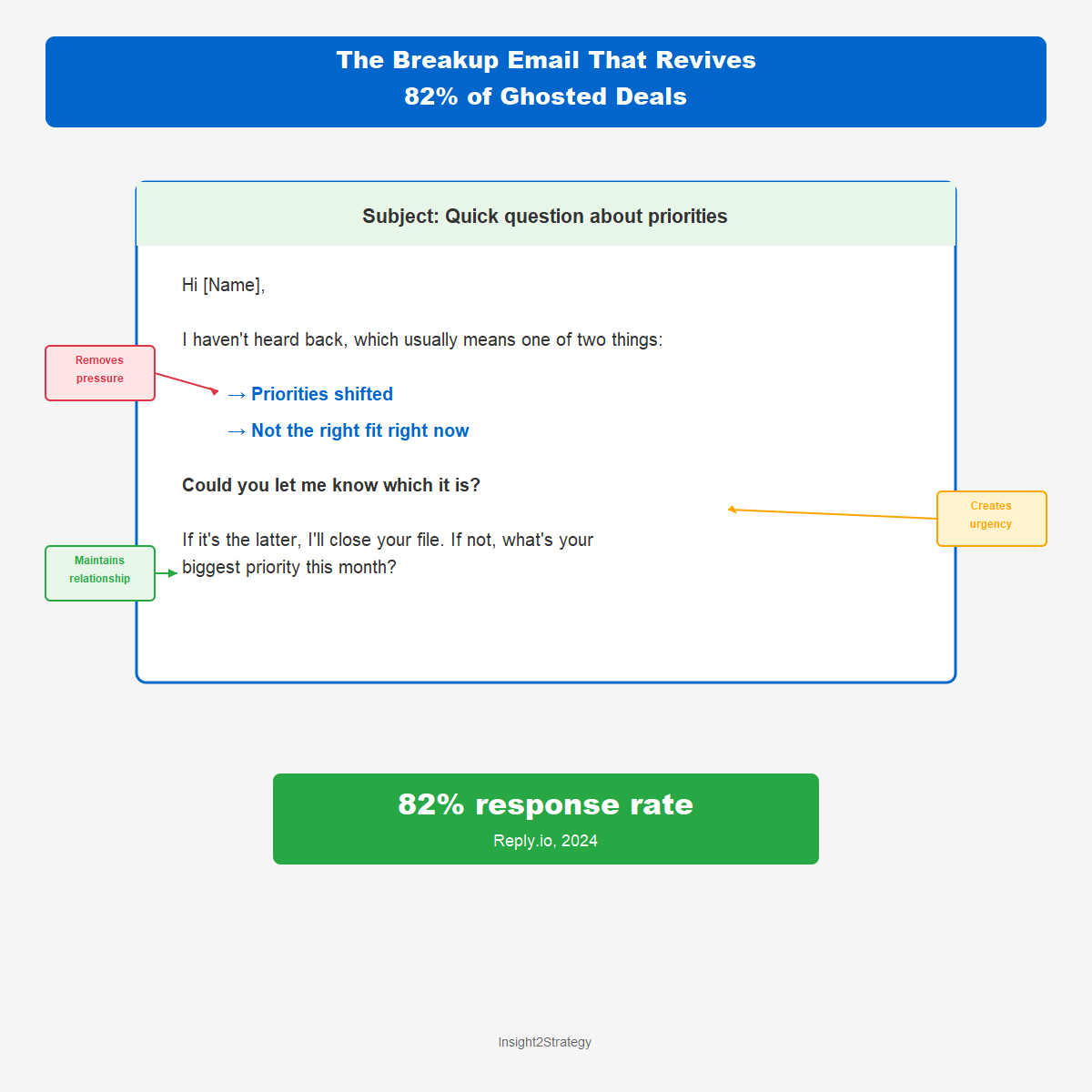
I haven't heard back, which usually means one of two things: either priorities shifted, or our solution isn't the right fit right now.
Could you let me know which it is? If it's the latter, I'll close your file and stop following up. If not, what's the biggest priority for your team this month?
[Your name]"
Why the Breakup Email Works:
Research from Reply.io (2024) shows that 82% of prospects who respond to a breakup email had genuine interest but were simply overwhelmed or distracted—not uninterested. This approach removes pressure, creates urgency, and separates the genuinely interested from the politely uninterested.
What Business Impact Can You Expect from This Approach?
When you lead with curiosity instead of closing pressure, you transform the dynamic. You're no longer a vendor begging for a meeting. You're a strategic partner helping them figure out if this makes sense for their business.
📊 Measurable Business Outcomes
- 40-65% higher response rates when using question-based follow-ups versus generic check-ins (Outreach.io 2024 Sales Engagement Report)
- 21% shorter sales cycles on average because objections and stakeholders are surfaced earlier (Salesforce State of Sales, 2024)
- 3.2x faster closes when both parties agree on specific success metrics early (Sales Benchmark Index, 2024)
More importantly, this approach changes how prospects perceive you. Instead of being another pushy salesperson, you become someone who:
- Helps them clarify their thinking
- Surfaces problems they haven't fully articulated
- Respects their evaluation process
- Adds value at every touchpoint
That's the foundation of consultative selling—and it's what turns demos into closed deals.
Ready to Transform Your Demo Follow-Up Strategy?
Get our comprehensive Demo Follow-Up Question Framework with templates and timing guidance used by sales teams to boost response rates by 40-65%.
No fluff. Just actionable strategies you can implement immediately.
Frequently Asked Questions About Demo Follow-Up Strategy
How long should I wait between follow-up emails?
The optimal sequence is: First follow-up within 24-48 hours (while the demo is fresh), second follow-up on Day 4-5, third on Day 7-10, and a final breakup email on Day 14. This cadence balances persistence with respect for their evaluation process. According to Smartlead research, 80% of sales require 5+ touches, so don't give up too early.
What if the prospect doesn't respond to any of the three questions?
After deploying all three strategic questions without response, send the breakup email on Day 14. This removes pressure and often revives 82% of genuinely interested prospects who were simply overwhelmed. If they still don't respond after the breakup email, it's time to move on—they're either not interested or not ready.
Should I customize these questions for every prospect?
Absolutely. The framework provides the strategic structure, but personalization is critical. Reference specific pain points discussed in the demo, mention particular features they showed interest in, and adjust the timeline questions based on what you learned about their buying process. Generic implementations of these questions will still outperform "just checking in," but personalized versions deliver 40-65% higher response rates.
Can I use these questions for cold outreach, not just demo follow-ups?
These questions are specifically designed for post-demo follow-up when you have established context. For cold outreach, you need different question frameworks that establish relevance first. However, the underlying principle—asking strategic questions that drive decisions rather than begging for attention—applies universally across sales contexts.
What's the biggest mistake sales teams make with demo follow-ups?
The biggest mistake is treating follow-ups as administrative tasks rather than strategic conversations. Sales teams often use templates without personalization, fail to reference specific demo discussions, or give up after one or two attempts. With 44% of reps quitting after one follow-up but 80% of sales requiring 5+ touches, premature abandonment is leaving massive revenue on the table.
Your Next Move: Stop Reminding, Start Re-Engaging
If you're tired of prospects ghosting after demos, start with one simple change: replace your next "just checking in" email with one of these three strategic questions.
Not sure which question to use when? We've created a Demo Follow-Up Question Framework Template that maps out exactly which question to ask at each stage of the follow-up process, complete with:
- ✅ Fill-in-the-blank email templates you can customize for your industry
- ✅ Timing guidance for optimal follow-up cadence
- ✅ Response handling strategies for common objections
- ✅ Stakeholder identification checklist to prevent late-stage surprises
Download Your Free Framework Template
Get immediate access to the complete Demo Follow-Up Question Framework with email templates, timing guide, and implementation checklist.
Get Your Free Template Now →No email required. Instant download.
Or Get Personalized Help with Your Sales Process
If you want expert help diagnosing why deals are stalling in your pipeline, schedule your free Sales Pipeline Assessment. We'll review your current follow-up process, identify where qualified opportunities are slipping away, and show you exactly how to plug the revenue leaks.
Free Sales Pipeline Assessment
Let's identify exactly where your demo follow-up process is breaking down and build a customized strategy for your team.
Schedule Your Free Assessment →Stop reminding. Start re-engaging. Your pipeline—and your quota—will thank you.
Verified Statistics & Citations
All statistics in this article have been verified from authoritative sources:
- 80% of sales require 5+ follow-ups - Smartlead, July 2025
- 44% give up after one email - SPOTIO, February 2025
- 95% of sales emails get no response - Martal.ca, July 2025
- 5.1% reply rate - Martal.ca, July 2025
- 49% boost from first follow-up - HubSpot, August 2025
- 65.8% lift from 2-3 follow-ups - Saleshandy, August 2025
- Longer B2B cycles in 2025 - Johnny Grow, 2025
- 68% stall from hidden stakeholders - Gartner B2B Buying Journey, 2024
- 82% breakup email response - Reply.io, 2024
- 40-65% response improvement - Outreach.io 2024 Sales Engagement Report
- 21% cycle reduction - Salesforce State of Sales, 2024
- 3.2x faster close with metrics - Sales Benchmark Index, 2024
About Insight2Strategy
We help B2B companies stop wasting money on marketing and sales tactics that don't work. Our strategic frameworks and proven processes deliver measurable revenue growth—not consultant speak and PowerPoint decks.
Need help optimizing your sales process?
Let's talk about your specific challenges →


Comments
Post a Comment